XtGem Forum catalog


* GO TO BOTTOM

Home Info Files Tutorials Comments Droid Admin Only


German Measles (Rubella)

by: Bjhay Olimpo (Admin)


mylogo

Overview


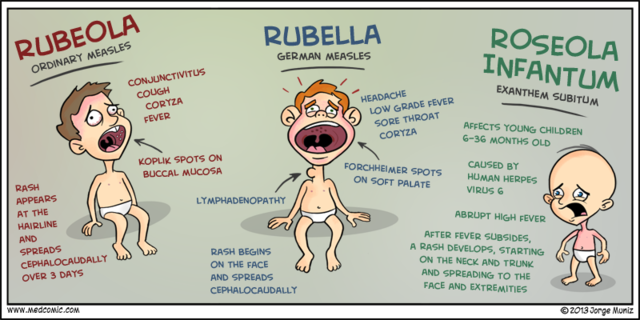
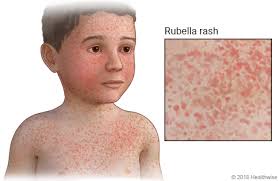
Rubella, also called German measles or three-day measles, is a contagious viral infection best known by its distinctive red rash.

Rubella is not the same as measles (rubeola), though the two illnesses do share some characteristics, including the red rash. However, rubella is caused by a different virus than measles, and is neither as infectious nor usually as severe as measles.

The measles-mumps-rubella (MMR) vaccine, usually given to children in the United States twice before they reach school age, is highly effective in preventing rubella.

Because of widespread use of the vaccine, the Centers for Disease Control and Prevention (CDC) has declared rubella eliminated in the United States, but cautions parents to make sure their children are vaccinated to prevent its re-emergence.

mylogo

mylogo

Signs and Symptoms (CDC)


The signs and symptoms of rubella are often so mild they're difficult to notice, especially in children. If signs and symptoms do occur, they generally appear between two and three weeks after exposure to the virus. They typically last about one to five days and may include:

Mild fever of 102 F (38.9 C) or lower

Headache

Stuffy or runny nose

Inflamed, red eyes

Enlarged, tender lymph nodes at the base of the skull, the back of the neck and behind the ears

A fine, pink rash that begins on the face and quickly spreads to the trunk and then the arms and legs, before disappearing in the same sequence

Aching joints, especially in young women

Cause


The cause of rubella is a virus that's passed from person to person. It can spread when an infected person coughs or sneezes, or it can spread by direct contact with an infected person's respiratory secretions, such as mucus. It can also be transmitted from pregnant women to their unborn children via the bloodstream.

A person with rubella is contagious for one to two weeks before the onset of the rash until about one or two weeks after the rash disappears. An infected person can spread the illness before the person realizes he or she has it.

Rubella is rare in the United States because most children receive a vaccination against the infection at an early age. However, cases of rubella do occur, mostly in unvaccinated foreign-born adults.

The disease is still common in many parts of the world. The prevalence of rubella in other countries is something to consider before going abroad, especially if you're pregnant.

Complications


Rubella is a mild infection. Once you've had the disease, you're usually permanently immune. Some women with rubella experience arthritis in the fingers, wrists and knees, which generally lasts for about one month. In rare cases, rubella can cause an ear infection (otitis media) or inflammation of the brain (encephalitis).

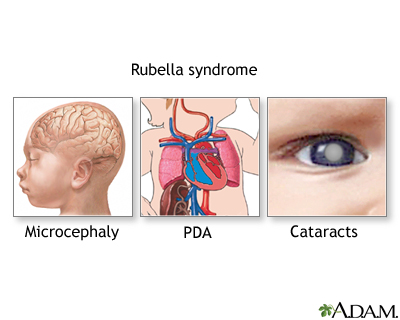
However, if you're pregnant when you contract rubella, the consequences for your unborn child may be severe, and in some cases, fatal. Up to 80 percent of infants born to mothers who had rubella during the first 12 weeks of pregnancy develop congenital rubella syndrome. This syndrome can cause one or more problems, including:

Growth retardation

Cataracts

Deafness

Congenital heart defects

Defects in other organs

Intellectual disabilities

Some women who get rubella during pregnancy have a miscarriage. In other cases, the baby doesn't survive long after birth. It’s best to get vaccinated against rubella before you get pregnant to protect your baby. You should wait at least 4 weeks after getting the vaccine to become pregnant. If you’re already pregnant, you shouldn’t get the vaccine.

Rubella can also cause complications in women who aren't pregnant, and in men. Young girls and women who get it can develop sore joints (arthritis). This side effect usually goes away within 2weeks, but a small number of women will have it long term. It rarely occurs in men and children.

In rare cases, rubella can cause more serious health problems, like brain infections or swelling and bleeding problems.

At Risk


Until the 1960s, rubella was a common childhood infection. Thanks to the MMR vaccine, the virus stopped spreading in the United States around 2004. Yet it still spreads in Asia, Africa, and other parts of the world. People from these areas sometimes bring the rubella virus to the United States with them when they travel.

Anyone can catch rubella if they're exposed to the virus and haven't been vaccinated. Pregnant women face serious risk, because rubella can cause serious complications in unborn babies.

Prevention


The rubella vaccine is usually given as a combined measles-mumps-rubella inoculation, which contains the safest and most effective form of each vaccine. Doctors recommend that children receive the MMR vaccine between 12 and 15 months of age, and again between 4 and 6 years of age — before entering school. It's particularly important that girls receive the vaccine to prevent rubella during future pregnancies.

Usually babies are protected from rubella for six to eight months after birth because of the immunity passed on from their mothers. If a child requires protection from rubella before 12 months of age — for example, for certain foreign travel — the vaccine can be given as early as 6 months of age. But children who are vaccinated early still need to be vaccinated at the recommended ages later.

Treatment


It’s a virus, so antibiotics won’t work.

Most of the time, the infection in children is so mild, it doesn't need to be treated. You can bring down your child's fever and ease aches with pain relievers like children's acetaminophen (Tylenol) or ibuprofen (Motrin). Don't give your child or teen aspirin, because of the risk for a rare but serious condition called Reye syndrome.

If you’re pregnant and think you’ve caught rubella, call your doctor right away. You may be able to take antibodies called hyperimmune globulin to help your body fight off the virus.

MMR vaccine


You don't need a vaccine if you:

Had two doses of the MMR vaccine after 12 months of age

Have blood tests that indicate you're immune to measles, mumps and rubella

Are a man who was born before 1957

Are a woman who was born before 1957, you already had the rubella vaccine, or you have a positive rubella immunity test

You typically should get a vaccine if you don't fit the criteria listed above and you:

Are a nonpregnant woman of childbearing age

Attend college, trade school or postsecondary school

Work in a hospital, medical facility, child care center or school

Plan to travel overseas or take a cruise

The vaccine is not recommended for:

Pregnant women or women who plan to get pregnant within the next four weeks

People who have had a life-threatening allergic reaction to gelatin, the antibiotic neomycin or a previous dose of MMR vaccine
If you have cancer, a blood disorder or another disease, or you take medication that affects your immune system, talk to your doctor before getting an MMR vaccine.

mylogo

Side effects of the vaccine


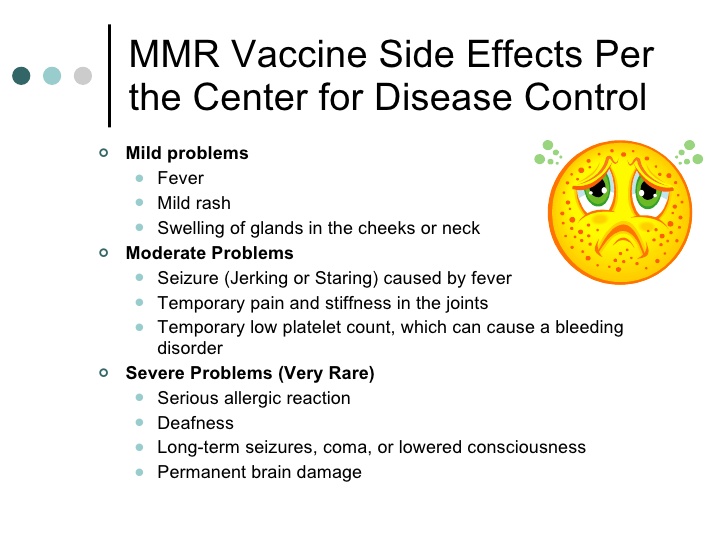
Most people experience no side effects from the vaccine. About 15 percent of people develop a fever between seven and 12 days after the vaccination, and about 5 percent of people develop a mild rash. Some teens and adult women experience temporary joint pain or stiffness after receiving the vaccine. Fewer than 1 out of 1 million doses causes a serious allergic reaction.

In recent years, as the number of children diagnosed with autism has risen — without a clear explanation — widespread concerns have been raised about a possible link between the MMR vaccine and autism. However, extensive reports from the American Academy of Pediatrics, the National Academy of Medicine and the CDC conclude that there is no scientifically proven link between the MMR vaccine and autism. In addition, there is no scientific benefit to separating the vaccines.

These organizations note that autism is often identified in toddlers between the ages of 18 and 30 months, which happens to be about the time children are given their first MMR vaccine. But this coincidence in timing typically shouldn't be mistaken for a cause-and-effect relationship.

When to see a doctor


Contact your doctor if you think you or your child may have been exposed to rubella or if you have the signs or symptoms listed above.

If you're contemplating getting pregnant, check your vaccination record to make sure you've received your MMR inoculations. If you're pregnant and you contract rubella, especially during your first trimester, the virus can cause death or serious birth defects in the developing fetus. Rubella during pregnancy is the most common cause of congenital deafness. It's best to be protected against rubella before pregnancy.

If you're pregnant, you'll likely undergo a routine screening for immunity to rubella. But if you've never received the vaccine and you think you might have been exposed to rubella, contact your doctor immediately. A blood test might confirm that you're already immune.

Reference: https://www.mayoclinic.org/diseases-conditions/rubella/symptoms-causes/syc-20377310

FACEBOOK PAGE

Time and Date: 06/13/26
Your Country:
Your Browser: Mozilla
Now Online: 1
Your IP: 216.73.216.104
Daily Visit: 1
Monthly Monitoring: 3
Total Visitor: 72
Subscribers: 2
Members: 0
Guestbook: 1

Text Me thru SMS

* GO TO TOP